Do home care robots replace caregivers? No. In 2026 they can remind, check in, keep company between visits, and in narrow cases support mobility research prototypes. They do not replace judgment, hands-on personal care, or the emotional work that keeps aging parents safe and dignified at home.
Families ask this question for good reason. Headlines about AI companions and eldercare robots can sound like a shortcut past hiring help, or like a threat to the aides families already trust. At the same time, paid care is hard to find and family caregivers are stretched. About 63 million U.S. adults provided ongoing care in the prior year, including 59 million caring for an adult, roughly one in four adults (AARP and National Alliance for Caregiving, Caregiving in the US 2025). The honest answer is better than either panic or hype: robots augment care. Human caregivers remain essential, and workforce data shows demand for people is rising, not disappearing.
Key Takeaways
- Do home care robots replace caregivers? No. They are support tools for presence, reminders, companionship, and narrow physical assist. They are not a full substitute for paid aides or family care.
- What robots can do in 2026: medication and appointment prompts, check-ins, conversation and loneliness support, family awareness, and limited research prototypes for sit-to-stand or fall catching (still not autonomous caregivers).
- What still needs a human: bathing, toileting, transfers that need judgment, wound care, clinical assessment, consent conversations, grief, and complex safety decisions.
- Workforce reality: BLS projects 17% growth for home health and personal care aides from 2024 to 2034, about 765,800 openings a year, on a base of about 4.3 million jobs (BLS Occupational Outlook Handbook). PHI counts about 5.4 million direct care workers and 9.7 million total openings from 2024 to 2034 (PHI Key Facts).
- Family playbook: Use a robot to cut reminder load and lonely hours. Keep humans for ADLs and judgment. Pair both with respite so no one burns out.

*Photo: Kampus Production / Pexels (free to use).*
What the "robots will replace caregivers" myth gets wrong
The myth assumes care is mostly tasks. Real care is tasks plus judgment, trust, and relationship.
Movie robots that cook, bathe, diagnose, and comfort on autopilot do not match what ships for home use in 2026. Consumer companion robots and smart-home tools help with prompts, conversation, and awareness. Research platforms explore physical support. Neither category absorbs the full job of a home health aide, personal care aide, or adult child who manages medications, moods, money, and midnight worry.
The myth also flips the labor story. If robots were about to erase caregiving jobs, you would expect projections to shrink. They do the opposite. Employers and families are still hunting for people. Robots enter that gap as load reducers, not replacements. For a clear product framing, see what an AI companion robot is.

*Photo: Kampus Production / Pexels (free to use).*
What home care robots can actually do in 2026
Think "reliable sidekick," not "new caregiver with a badge."
Useful capabilities for families today usually fall into a few buckets:
- Reminders and routines: medications, hydration, appointments, and simple daily structure. Habit support matters when cognitive load is high. Pair this with your own medication plan rather than treating the robot as a pharmacy.
- Presence and companionship: conversation, check-ins, and a sense that someone (or something) is paying attention between human visits. AARP's reporting on AI companion robots such as ElliQ frames them around loneliness, reminders, and daily engagement, not as replacements for aides (AARP on AI companion bots). See also how companion robots help lonely seniors at home.
- Family awareness: missed check-ins, unusual silence, or escalations that tell a daughter across town to call. That reduces "are they okay?" anxiety without pretending the robot can diagnose.
- Narrow physical assist (mostly research): MIT's E-BAR prototype acts like mobile handlebars that can help with sit-to-stand, support walking, and inflate side airbags if a fall starts. It is remote-controlled today, with autonomy as future work, and MIT presents it as support for aging in place amid a caregiver shortage, not as an autonomous caregiver (MIT News, May 13, 2025). Our deeper take sits in can a home robot prevent falls before they happen.
Older adults are open to home tech when it feels useful. In AARP's 2025 Tech Trends research, 63% of adults 50-plus use one or more smart home devices, and 66% see technology as a way to enrich daily life and aging (AARP 2025 Tech Trends and Adults 50-Plus). Openness to tech is not the same as willingness to fire the aide.

*Photo: Kampus Production / Pexels (free to use).*
What still requires a human caregiver
If the task needs skin, scent, ethics, or improvisation under stress, keep a human in the loop.
Humans remain essential for:
- Hands-on ADLs: bathing, toileting, dressing, feeding support, and transfers when balance, pain, or fear change mid-move.
- Clinical judgment: noticing that "something is off," reading a wound, deciding whether tonight needs urgent care, or following a care plan after hospital discharge.
- Emotional care: grief after a spouse dies, shame about incontinence, stubborn refusal of help, and the trust that comes from a known face.
- Consent and conflict: talking through a camera in the living room, a robot trial, or a move to more paid hours. Those conversations need warmth and patience. Start with how to talk to aging parents about a home care robot.
- Household and logistics complexity: coordinating agencies, insurance denials, neighbor keys, and the social calendar that keeps a parent eating and engaged.
A robot can prompt "time for your pill." A human notices the parent hid the pill under the napkin and asks why. That gap is why replacement talk fails families in practice.
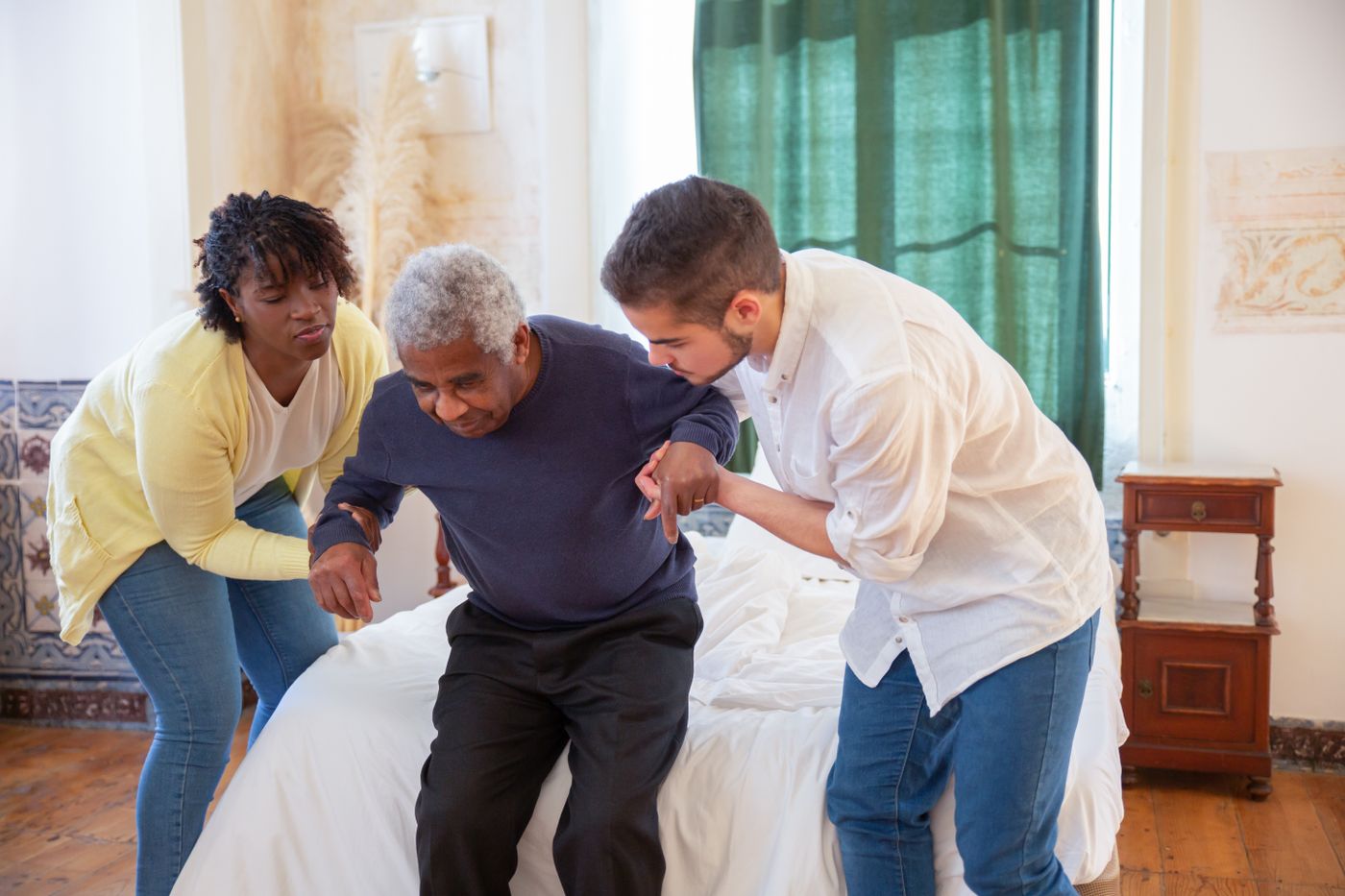
*Photo: Kampus Production / Pexels (free to use).*
Why workforce data points the other way
If robots were replacing caregivers, demand for human care would be falling. It is climbing.
According to the BLS Occupational Outlook Handbook for home health and personal care aides:
- Number of jobs in 2024: about 4,347,700
- Projected growth, 2024 to 2034: 17% (much faster than average), adding about 739,800 jobs
- Openings each year: about 765,800, many from people leaving the occupation, not only from net growth
- 2024 median pay: $34,900 a year ($16.78 an hour)
PHI's Direct Care Workers Key Facts paint the wider direct care picture: about 5.4 million workers today, just over 772,000 new jobs from 2024 to 2034, and about 9.7 million total openings when you include replacements (PHI: Understanding the Direct Care Workforce; PHI Key Facts 2025 report page).
Family care is not shrinking either. Caregiving in the US 2025 finds 63 million caregivers overall and intensive weekly hours for many (average about 27 hours per week among caregivers studied). Robots that cut reminder load or lonely evenings help those households. They do not erase the need for people.
For industry readers, the strategic read is clear: build products that make scarce caregivers more effective and family caregivers less exhausted. Do not market "replace the aide." That claim is neither true nor responsible.

*Photo: RDNE Stock project / Pexels (free to use).*
How families should use robots WITH caregivers
Treat the robot as a third shift for prompts and presence, and keep humans for body care and hard calls.
A practical playbook:
- Map the week in three layers. Paid aide hours for bathing, transfers, and house tasks. Family hours for appointments, money, and relationship. Robot hours for reminders, check-ins, and companionship in the gaps. This is how many aging in place setups stay sustainable.
- Write escalation rules. Who gets a missed check-in alert? When do you call 911 versus the neighbor with a key? Robots help only when humans agree on the ladder.
- Protect caregiver sleep and identity. If burnout signs are showing (irritability, dread, health slips), add respite care and read how to spot caregiver burnout. A robot is one tool in that load-reduction kit, not the whole kit.
- Keep consent first. Cameras, microphones, and always-on companions need a clear yes from the parent, plus a way to pause or cover sensors.
- Do not cut paid hours because a robot arrived. Cut reminder nagging. Cut lonely empty afternoons. Keep hands-on care until a clinician or care manager says needs truly fell.

*Photo: Kampus Production / Pexels (free to use).*
FAQ: do home care robots replace caregivers?
Will a home care robot replace my parent's paid aide?
No. Expect help with reminders, presence, and family alerts. Keep the aide for bathing, transfers, meal support, and anything that needs hands and judgment.
Are home care robots a threat to caregiving jobs?
Current labor projections point to more openings for aides, not fewer. Robots are entering a shortage, not ending one (BLS and PHI data above).
Can a robot handle overnight care alone?
Not as a full substitute. Overnight risk (falls, toileting, confusion) still needs human coverage, a monitored alert plan, or a higher care setting when nights are unsafe.
How is a companion robot different from Alexa or a medical alert?
Voice speakers answer questions and set timers. Medical alerts focus on summoning help after a problem. Companion-style home care robots aim for ongoing presence, check-ins, and care-aware routines. Compare categories carefully before you buy, and keep humans in the plan either way.
What should we try first if we are overwhelmed?
Stabilize human coverage and respite, then add a robot for the specific gap that hurts most (missed meds, lonely afternoons, long-distance check-ins). Start small, measure stress for both parent and caregiver, and expand only if the gap actually closed.

*Photo: Anna Shvets / Pexels (free to use).*
Conclusion: augment caregivers, do not erase them
Do home care robots replace caregivers? No. The useful 2026 story is partnership: robots handle repetition and presence, humans handle judgment, body care, and love.
That is also the only story that matches the data. Millions of family caregivers, millions of direct care workers, and hundreds of thousands of projected openings each year are not a workforce about to vanish. They are a workforce that needs better tools.
If your family wants companion presence, reminders, and calmer check-ins that sit beside human care rather than pretending to replace it, learn more about Rhem, the home care companion robot from Rhem Labs.