
Why Seniors Hide Their Health (And What It Means for Robot Design)

The typical eldercare pitch assumes a fall, then a report. That is not how most older adults actually behave. More than 1 in 4 adults 65 and older fall each year, and less than half tell their doctor. The gap is not forgetfulness alone. It is identity, pride, and a rational fear that disclosure will cost them the car keys or the house.
Key takeaways
- CDC data: over 14 million older adults fall each year, about 1 in 4. Fewer than half tell a clinician.
- People hide falls and other health changes to protect independence and to avoid being a burden, not because they do not care.
- Adult children often hear a health question as safety. Parents often hear it as an audit.
- Language is cheap and high leverage. "Balance" and "staying independent" open a door that "fall risk" slams shut.
- An eldercare robot should be the senior's ally, not the family's informant. Data defaults to the user. Escalation is opt-in except for true emergencies.
- Detection is the easier half. How a family responds to disclosure is the hard part, and it is mostly outside the product.
*Photo: Age Cymru / Unsplash*
The numbers on silence
Falls are the leading cause of injury for adults 65 and older. CDC estimates more than 14 million older adults, about 1 in 4, report falling each year. About 37% of those who fall report an injury that needed medical treatment or restricted activity for at least a day.
The same agency is blunt about disclosure: less than half tell their doctor. Falling once doubles the chance of falling again, so the unreported first fall is not a closed incident. It is a missed chance to change the next one.
Some Medicare analyses put non-reporting to healthcare providers even higher, up to 72%. That figure is an upper bound from a different evidence base than the CDC's "less than half." It should not be mashed into one statistic. Non-injurious falls are the most invisible of all. Older reviews have found that 75% to 80% of falls that do not cause injury never get reported at all.
Men are especially unlikely to bring a fall up unless a clinician asks directly. Cognitive impairment makes the problem worse: if nobody witnessed it, it often never enters the record.
Industry surveys that claim "1 in 4 seniors keep falls secret from family" are not the same as CDC surveillance. Treat those as marketing color, not as a peer-reviewed rate.

*Photo: Age Cymru / Unsplash*
Why people do not tell
The literature on *why* is mostly qualitative. There is no single study that ranks reasons with clean percentages. The themes still repeat across papers, countries, and years.
They normalize it. A stumble becomes "just aging." If nothing can be done, there is nothing to report.
They decide it was not serious enough. If they were not badly hurt, they do not want to waste a doctor's time or spoil a "I'm fine" image. Australian primary-care research has documented this self-management logic for years.
They fear what happens next. Reporting can mean lost driving privileges, new house rules, or a conversation about assisted living. The Merck Manual notes that older adults often withhold health changes because they fear restriction or institutionalization. That fear is not irrational. Families do restrict. Facilities do get discussed.
A fall threatens identity. Clinical nursing research has treated falls as a threat to the self as an independent adult, not only as a biomedical event. A personal emergency alarm can feel like a "badge of dishonour," as a PLOS ONE study of alarm use described it: people do not want to bother anyone, and they fear that a hospital trip is a one-way ticket.
They do not even call it a fall. If they caught themselves, or were not injured, many people will not classify the event as a "fall" on a screening form. Under-reporting is concealment plus miscategorization plus bad recall. CDC has noted that recall of minor injuries is especially weak.

*Photo: agilemktg1 / Flickr, public domain*
"I don't want to be a burden"
Self-perceived burden is the engine under a lot of this. McPherson and colleagues described it as empathic concern for the impact of one's illness or care needs on others, mixed with guilt and a smaller sense of self.
That feeling does not stay as a mood. It turns into behavior. People actively conceal changes in how they are doing so the household can keep looking normal. They also decline help they see as "unnecessary" so they do not add work. A 2022 paper in the *Journal of Pain and Symptom Management* called out both moves: concealment and passive inaction.
You see the same pattern outside the U.S. Research in China on filial piety found a double edge. Respect for parents can produce more care, and it can also produce more hiding, so children will not worry. Different culture, same destination: do not become the problem.
When a child's question feels like an audit
Adult children think they are asking about safety. Parents often hear a status review.
Internalized ageism is part of it. Levy's stereotype embodiment work describes how people absorb ugly age stereotypes and then distance themselves from "old" so they do not have to wear the label. Being called frail is not a clinical note. It is an identity hit.
Parents also control information on purpose. A GSA 2019 paper by Toyokawa, Darling, and Toyokawa found parents withhold several kinds of information to keep autonomy: medications, new symptoms, money given to children, living wills, death preparation, debts. A hidden fall belongs in that list. It is closer to hidden debt than to forgotten trivia. Both protect standing in the relationship.
A 2021 *Journal of Adult Development* study put the mismatch in one sentence: parents optimize for autonomy and self-sufficiency, children optimize for safety and convention. A health question, in that frame, is a prelude to restriction.

*Photo: agilemktg1 / Flickr, public domain*
It is not only falls
Levy and colleagues, in *JAMA Network Open* (2018), found that most people withheld at least one of seven types of medically relevant information to avoid being judged. That includes serious things, not only bruises.
Hearing loss follows the same script. ASHA has long reported that only about 20% of people who could benefit from hearing aids seek help, often waiting a decade after the problem is obvious, in part because hearing loss is culturally coded as "old" or "slow."
Depression in later life often shows up as fatigue, sleep, or memory complaints rather than as a mood story, which is one reason it gets missed. Incontinence, chronic pain, and skipped medications run on stigma plus "that's just aging." A robot that only hunts for falls will miss the rest of the concealment pattern.

*Photo: EU-Ukraine cooperation / Flickr, CC BY-SA 2.0*
Say "balance," not "fall risk"
This is the cheapest intervention in the file, and it is still underused.
Older adults will talk about balance problems. They go quiet when the topic is labeled falling or fall risk. Work using NHATS data found that *perceived* balance problems predicted later falls (odds ratio 1.69) better than some objective performance tests, and standard tools often skip that question.
The AGS STEADI workgroup and the Gerontological Society of America's National Center to Reframe Aging point the same way: talk about improving balance, safe mobility, staying independent. Sell the feature as time in the house they already have, not as a hedge against catastrophe.
CDC's STEADI screening is three questions, asked by the clinician, not left on a clipboard:
- Have you fallen in the past year?
- Do you feel unsteady when standing or walking?
- Do you worry about falling?
The mechanism is the ask. Passive waiting-room forms barely move. One study of patient-initiated screening saw uptake around 2%. The burden belongs on the person doing the screening, not on the older adult to volunteer a threat to their identity.
What this means for an eldercare robot
Privacy and independence are not a tradeoff you can "set once." Berridge and Wetle argued in *The Gerontologist* that they are interdependent. Invade privacy and you also nick independence. Boise and colleagues found that 60% of remote-monitoring users had *more* privacy concern after a year, not less. Consent at install is not consent forever.
Adult children like passive monitoring more than their parents do. They also overestimate how fine the parent is with it. A South Korean study of older adults (mean age 77) found 13.5% would share their data with no one, and a preference for family and hospitals over researchers, government, or insurers. Themes included not wanting to be spied on by family, and wanting to keep the decision.
A 2023 companion-robot study (N=825, mean age 63.9) found about half were comfortable with a companion robot, only 15% were comfortable with it recording conversations, and 52.8% were open to facial-expression reading. Preferred recipients, in order: self, then spouse or partner, then a medical provider. Exact percentage splits for "doctor vs family" in some Berridge papers sit behind paywalls. The ranked order is what we can stand on.
That is the design tension in products like ElliQ that both sit with the older adult and market "insights" dashboards to family. PARO, the FDA-cleared seal, shows the identity problem from another angle: some cognitively intact people reject it as "for someone more needy," which is identity protection, not a UX nit.
Berridge's line is the test: when the technology lets older adults be controlled, rather than letting them have control, it makes the power imbalance worse.

*Photo: Jiuguang Wang / Flickr, CC BY-SA 2.0. Nao robot at Georgia Tech.*
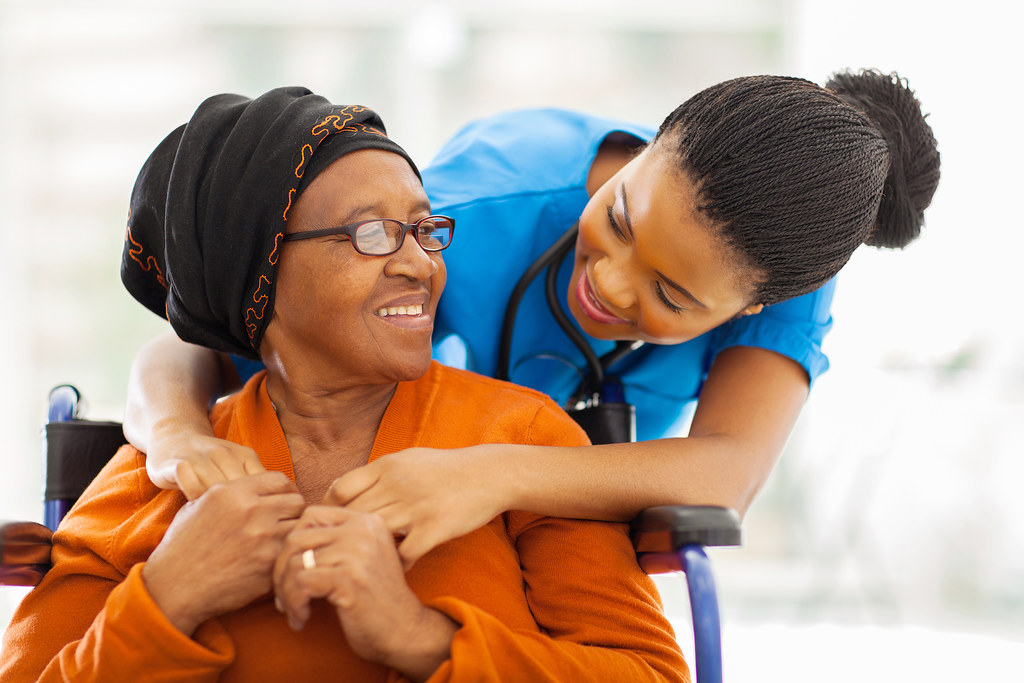
*Photo: agilemktg1 / Flickr, public domain*
Design it as an ally
1. The robot works for the senior. Data ownership defaults to them. Sharing with family or a clinician is opt-in, per data type, and reversible. Onboarding should say so out loud: I work for you. You decide what gets shared, and with whom. A caregiver insights dashboard as the default is how you lose the room.
2. Frame around independence and balance. Not fall risk, frailty, or decline. The product promise is staying home and staying steady, which matches what most people 50-plus already say they want.
3. Split detection from automatic family reporting. Passive detection can be on. Escalation should not. For a maybe-fall, a face-saving window: I noticed you may have had a fall. Do you want a check-in, or should I let someone know? Automatic override without consent is for objective emergencies only, on thresholds the person already agreed to: no response, prolonged immobility, impact plus silence.
4. Control has to be granular and revisitable. A privacy view of who saw what, and when. Consent you can change next month, because health and worry change. Prefer gait, presence, and movement over raw audio or video. Conversation recording failed the comfort test for most people in that 2023 sample.
If privacy concern rises after year one, the answer is more transparency, not more sensors. If someone keeps declining family escalation, a clinician can be the third party, not an adult child by default. If no-consent overrides fire often, the thresholds are wrong and the ally relationship is already leaking.
This is how we think about Rhem: check-ins, vitals, reminders, and fall detection that stay in the house unless the person sharing them says otherwise. Health data does not leave the home as a default. That is not a slogan. It is the permission to exist in a market where concealment is the normal human behavior.
The honest limit
A robot cannot fix what happens after a fall is disclosed. Fear of restriction is often a correct prediction. If the family responds to every event with a tighter leash, the senior learns, again, not to tell. Detection is the solved-ish part. The family's response is the hard part, and it is largely outside the product.
So the job is split. Build an ally that the older adult will actually leave on. And spend as much effort equipping families to hear a disclosure without immediately taking the keys as you spend on the radar.
Until then, more sensors pointed at a person who has every reason to stay quiet will just give you a more detailed record of what they refused to say.
FAQ
Why don't older adults report falls to their doctor?
CDC finds that less than half of older adults who fall tell their doctor. Reasons include protecting independence, not wanting to be a burden, not classifying the event as a "fall," and fear that disclosure will trigger restrictions. It is a mix of choice, identity, and recall, not only stubbornness.
How common are falls in people 65 and older?
CDC estimates over 14 million older adults, about 1 in 4, fall each year. About 37% of those who fall report an injury that needed treatment or limited activity.
What language should families use instead of "fall risk"?
Ask about balance, steadiness, and staying independent. STEADI's three questions (fallen in the past year, feel unsteady, worry about falling) work because the clinician asks. Waiting for someone to volunteer "I fall" does not.
Should a home robot tell the family about every fall?
No. Detection can be passive. Reporting should be the senior's choice except for true emergencies they already defined. Default family dashboards recreate the audit that people were hiding from.
How does this show up in Rhem?
Rhem is built as a home health companion, not a family informant. Vitals, reminders, and fall detection are for the person in the house first. Reserve Rhem if that is the relationship you want with the machine.