
How to Remember Medications at Home

Missed doses are common, even when people want to take their medicine. In 2021-2022, 88.6% of U.S. adults age 65 and older took a prescription drug (CDC National Center for Health Statistics, September 5, 2024). The World Health Organization has long reported that adherence to long-term therapy for chronic illness in developed countries averages only about 50% (WHO, July 1, 2003).
This how-to is for older adults at home and the family members who help them. Practical medication reminders for seniors work best as a stack, not a single gadget. You will set up a current list, a daily habit, a visible pill organizer, a backup reminder, a shared log, and, when it fits, a spoken in-person cue. It is education plus product context for aging in place with a home robot. It is not medical advice. Do not skip, split, or stop a prescribed drug unless a clinician tells you to.
> Key Takeaways > - Most older adults take at least one prescription, and many take five or more, so a written list plus one visible system beats relying on memory. > - Pair each dose with an existing habit (breakfast, bedtime) before you add gadgets. > - Pillboxes, blister packs, alarms, and apps help some people. A large trial found cheap reminder devices alone did not fix nonadherence. > - Keep a simple log families can bring to a doctor or pharmacist. > - A home robot can add a spoken, in-the-room cue and a shareable record. It does not replace clinical care.
Before You Begin: What You Need
By the end of setup, you should have one current list, one place where pills live, and one reminder that still works if a day goes sideways.
What you'll need:
- Every prescription bottle, inhaler, patch, eye drop, and over-the-counter product the person actually uses
- A weekly pill organizer (morning, noon, evening, and bedtime slots if the schedule needs them)
- A notebook, printed chart, or shared note that family can see
- A clock, phone, or speaker that can ring at the same time each day
- The pharmacy phone number and the prescribers' names
- Time: about 60 to 90 minutes for the first setup, then 10 to 15 minutes once a week to refill
- Difficulty: Beginner. You should be able to read a label and call a pharmacist with questions
If the regimen is confusing or doses are often missed, ask the pharmacist before you change how medicines are stored or timed.
Photo: Anna Shvets via Pexels, Pexels License.
Step 1: Build One Current Medication List
By the end of this step, you will have a single list that matches what is in the home, including prescriptions, vitamins, and over-the-counter products.
The same CDC NCHS report found that among adults 65 and older in 2021-2022, 3.6% did not get a needed prescription because of cost, and 3.4% did not take a medicine as prescribed because of cost. Cost is one reason doses are missed. Forgetting and complex schedules are others. You cannot fix what you have not written down.
- Empty one table and put every bottle, blister pack, cream, and supplement in one place.
- Write, for each item: name, dose, how often, time of day, what it is for, clinician, pharmacy, and refill date.
- Add extras the bottle may not mention: take with food, do not crush, bedtime only.
- Note duplicates. Two bottles of the same drug from different pharmacies is a common mix-up.
- Photograph the list and share it with one other family member.
Verify: Read the list out loud against the bottles. If a listed drug is not in the house, call the pharmacy before the next due dose.
Bring the list to the next clinic visit. Families who already track blood pressure can keep it next to that log. See how a home robot checks blood pressure at home.

Photo: via Unsplash, Unsplash License.
Step 2: Pair Each Dose With a Daily Habit
By the end of this step, every regular dose will have a trigger that already happens in the home, such as making tea or brushing teeth.
National Library of Medicine patient guidance on taking medicine at home starts with a routine, not a new gadget (MedlinePlus, retrieved August 27, 2026). That matches interview research. In a 2024 study of 22 adults age 50 and older taking one to three prescriptions, people used two or more routines or objects as triggers. Only 14% (3 of 22) used a time-based alarm, and none used an adherence app. Nonadherence showed up when the routine broke (Interactive Journal of Medical Research, 2024).
- Name the existing habit for each dosing window. Morning pills with breakfast. Bedtime pills after the last bathroom trip.
- Put the organizer in the path of that habit. In the same study, 86% stored pill cases or bottles in a visible spot.
- Keep a glass of water there so the cue is complete.
- Plan for disruptions: travel, guests, a late breakfast. Write a backup ("if breakfast is skipped, take with mid-morning coffee").
Verify: For two days, notice whether the person reaches the pills because of the habit, or only after a reminder. Keep the organizer away from the stove and sink. Heat and moisture damage many medicines.
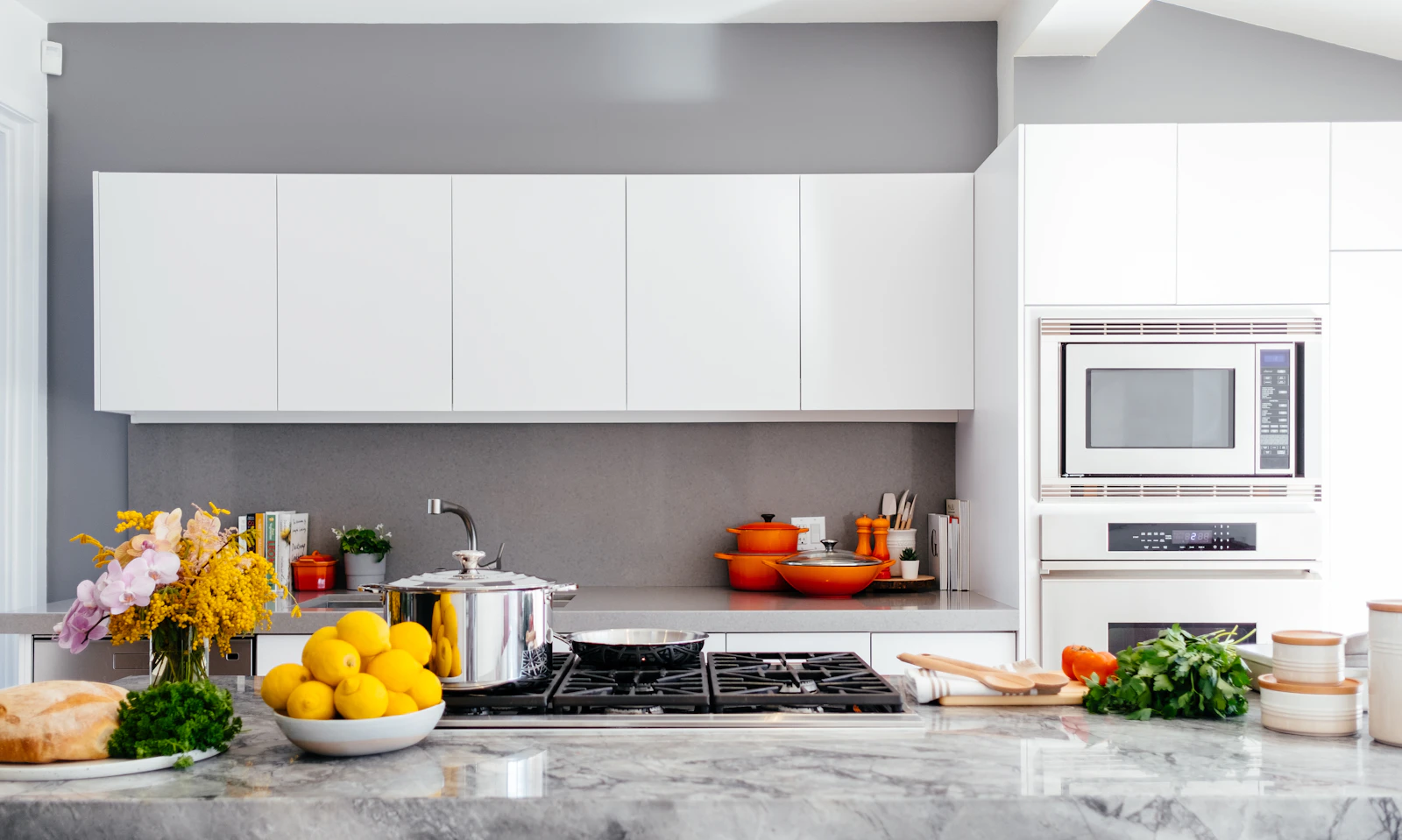
Photo: Sidekix Media via Unsplash, Unsplash License.
Step 3: Set Up a Pill Organizer You Can See
By the end of this step, the week's doses will sit in labeled compartments that make a missed day obvious at a glance.
Polypharmacy is now typical. Among U.S. adults age 65 and older, the share taking five or more prescription drugs in the past 30 days rose from 33.3% in 2001-2004 to 43.0% in 2017 through March 2020 (CDC, Health, United States, last reviewed August 6, 2024). More bottles mean more chances to take the wrong one.
In the 2024 interview study, 77% preferred a pill case over leaving daily doses in original bottles (i-JMR / PMC, 2024). Keep the original labeled containers for refill dates.
- Choose the right box. A 7-day box is enough for once-daily drugs. Use a four-times-a-day box if doses are spread through the day.
- Fill it on the same weekday every week, with the list in hand.
- Load one drug at a time across the week, then the next drug.
- Check vision and dexterity. If lids are hard to open, ask the pharmacy for easy-open caps or a blister pack they fill for you.
Verify: Midweek, look at that day's slot. Empty usually means the dose was taken. Still full means it was missed. Do not double up to catch up unless the prescriber or pharmacist says that is safe for that drug.

Photo: Kampus Production via Pexels, Pexels License.
Step 4: Add Medication Reminders That Match the Problem
By the end of this step, you will have a second cue (alarm, app, pharmacy blister pack, or a person) that fires when the habit fails.
Reminders help when the problem is forgetting. They do less when cost or beliefs are the barrier. CDC notes both unintentional issues (complex regimens, unclear labels) and intentional ones (cost, side effects, beliefs). About one in five new prescriptions are never filled, and among those filled, about 50% are taken incorrectly for timing, dose, frequency, or duration (CDC MMWR, November 17, 2017).
A large trial is a caution. In REMIND, 53,480 adults taking one to three chronic medicines got a pillbox, a timer cap, a toggle strip, or no device. The devices did not improve optimal adherence (JAMA Internal Medicine, 2017).
| If the usual failure is... | Try this first |
|---|---|
| "I cannot remember if I already took it" | Weekly organizer with visible empty or full slots |
| "The morning got busy" | Alarm tied to the habit, not to an exact minute |
| "Too many bottles" | Pharmacy-filled blister pack |
| "Family lives far away" | App that notifies a designated person |
| "Screens are ignored" | Spoken, in-room cue from a person or home robot |
- Set one alarm per dosing window, labeled "8 a.m. pills," not a generic chime.
- Ask the pharmacy about blister packs. They reduce sorting errors. They still need a reminder to open today's bubble.
- If you use an app, pick one the older adult will open, or one a caregiver can monitor.
- Keep the reminder in the same room as the pills.
Verify: For seven days, mark whether the reminder fired and whether the dose was taken. If the alarm is dismissed and the slot stays full, you need a different cue, not a louder one.
See more home health routines on the Rhem Labs blog.

Photo: Pixabay via Pexels, Pexels License.
Step 5: Keep a Shared Log for Family and Clinicians
By the end of this step, missed doses, side effects, and refill dates will live in one place a family member can show a clinician.
Family caregivers are already doing this work, often with little training. In 2025, 63 million U.S. adults provided ongoing care. Of those, 59 million cared for an adult with a complex medical condition or disability (AARP and National Alliance for Caregiving, 2025). More than half (55%) provided medical or nursing tasks, yet only 22% had training for those tasks.
- Use a simple grid: date, time window, taken / missed / late, and a one-line note.
- Write the miss on the same day. Do not reconstruct last week from memory.
- Share it on purpose. One sibling in another city should see the same grid.
- Bring the log to visits with the medication list. Ask what a missed dose of each drug actually means. The answer is different for a statin than for an anticoagulant.
Verify: After one week, you should be able to answer, without guessing, how many doses were missed and which time of day failed.
Some older adults downplay problems so they will not worry the family or lose independence. Keep the log factual, not a quiz. For more on that pattern, see why seniors hide their health, and what it means for robot design.

Photo: Kampus Production via Pexels, Pexels License.
Step 6: Add a Spoken, In-Person Cue at Home
By the end of this step, you will know whether a person in the room (or a home companion robot) should be the backup when screens and pillboxes are not enough.
A phone buzz is easy to ignore. A voice in the same room is harder to miss. That is the product context for Rhem, an in-home health companion from Rhem Labs that can combine medication reminders with vitals and fall detection.
Cognitive load matters. In a nationally representative study, 13.12% of people with dementia had difficulty managing medications, compared with 1.96% of people with intact cognition. Medication management difficulty was associated with higher hospitalization risk among those with dementia (odds ratio 1.71) (Journal of Applied Gerontology, 2025). A spoken cue does not treat dementia. It can reduce how often the person has to remember the clock.
What a useful in-home cue looks like:
- It happens in the room, not only on a lock screen elsewhere.
- It names the task ("morning pills with water") rather than a generic alert.
- It can be acknowledged, so the household knows whether anyone responded.
- It leaves a log a family member can open later and, with permission, share with a clinician.
- It sits beside other safety tasks. Compare options in home care robot vs medical alert for fall detection.
If you are new to the category, start with what an AI companion robot is. Then decide whether a robot, a person, or a pharmacy blister pack is the right layer.
Verify: Run the spoken cue for two weeks with the pillbox. If the slot stays full after the cue, the barrier is people, cost, or side effects. Those belong with a clinician.

Photo: Andrea Piacquadio via Pexels, Pexels License.
Common Mistakes to Avoid
Using a pillbox as the only system. The REMIND trial cited above found a mailed box, timer cap, or toggle strip did not raise adherence on its own. Pair the box with a habit and a backup cue.
Hiding the medicines. Out of sight is out of mind. A locked box may be needed if children visit. For daily adult use, visible and consistent beats hidden.
Doubling a missed dose. Some drugs can be taken when remembered. Others cannot. Record the miss. Ask the clinician or pharmacist what to do next. Do not skip prescribed drugs as a way to simplify the day.
Ignoring cost. The CDC NCHS report cited above found cost-related nonadherence much higher among food-insecure older adults than among food-secure ones. A 2026 analysis associated the Inflation Reduction Act's 2024 Part D changes with a 4.9 percentage-point drop in cost-related nonadherence among eligible Medicare beneficiaries, and a 7.8-point drop among those with multiple chronic conditions (JAMA Internal Medicine, 2026). If money is the barrier, ask about generics, 90-day fills, or Extra Help. A reminder app will not fill an unaffordable bottle.
Leaving family out, or taking over every pill. Share the log. Do not turn every meal into an interrogation.

Photo: Nikomedi via Unsplash, Unsplash License.
What Success Looks Like
If the system is working, you should see one list that matches the bottles, a weekly organizer whose empty slots line up with the schedule, at most a couple of missed doses in a typical week with each miss written down, and a family member who can describe the regimen without calling home first.
Adherence is not a character test. Among 171,097 people age 75 to 90 with hypertension or diabetes, those in the highest overall adherence quintile had lower odds of emergency visits, hospital stays, and death than those in the lowest quintile (adjusted odds ratio 0.60 for 2019 all-cause mortality) (The American Journal of Medicine, 2024). CMS estimated that better adherence to diabetes, hypertension, and cholesterol medicines among Medicare beneficiaries was associated with $27 billion to $46.6 billion in costs avoided from 2013 to 2018 (CMS National Impact Assessment, 2021). Your household metric is simpler: the right dose, in the right slot, most days, with a record you can share.
A stretch goal: bring the record to the next visit and ask whether any drug can be taken fewer times a day.

Photo: Pixabay via Pexels, Pexels License.
Frequently Asked Questions
What if we already use a pillbox and still miss doses?
Treat the box as storage, not as a reminder. Add a habit cue in the same room, then a spoken backup. If misses continue, ask the pharmacist whether a blister pack or a simpler schedule is possible.
Can a medication reminder app replace a person?
Sometimes, for someone who already uses a smartphone all day. In that 2024 interview study, none of the 22 participants used an adherence app. Apps help most when a caregiver also gets the missed-dose ping.
Is this medical advice?
No. This article is general education about home routines and product context for Rhem Labs. Talk with a clinician or pharmacist before changing, skipping, or combining medicines.
When should we call the clinic instead of adding another reminder?
Call if doses are missed often, or if there is new confusion, fainting, bleeding, a fall, or a suspected double dose. A reminder cannot fix the wrong drug or a side effect. The CDC MMWR Grand Rounds cited above estimated direct U.S. health care costs tied to nonadherence at about $100 billion to $300 billion a year.

Photo: Volodymyr Hryshchenko via Unsplash, Unsplash License.
Conclusion
You now have a six-step system: list, habit, visible organizer, backup reminder, shared log, and, if needed, a spoken in-person cue. Gadgets help only when they match the real barrier. A home companion can handle the "pills are in the kitchen" layer and keep a record the clinic can use.
This is not medical advice. Do not stop a prescribed medicine to make the routine easier. Families can learn more at Rhem Labs.