
Can a Home Robot Help With Dementia Care at Home?
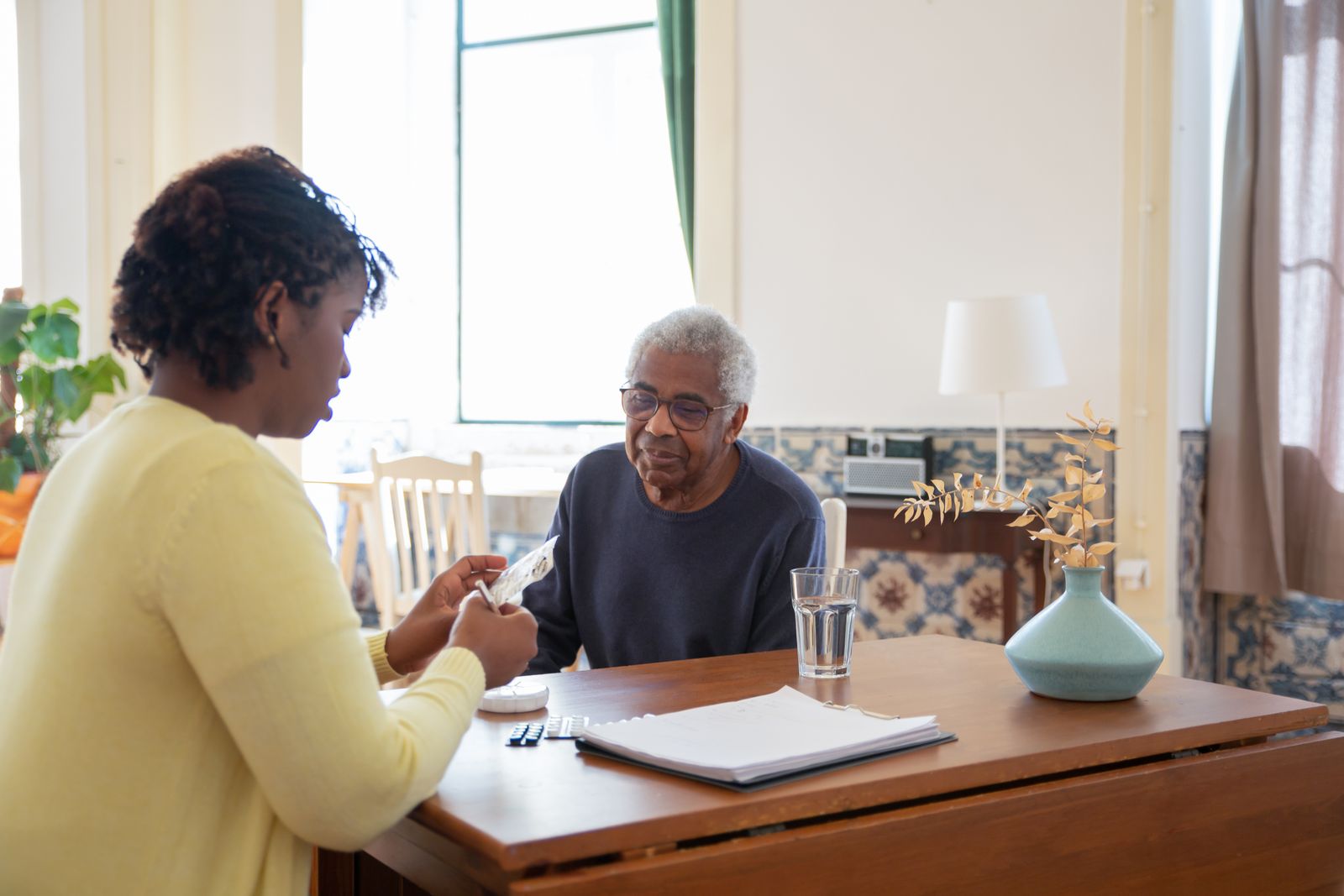
Yes, a home robot can help with mild-to-moderate dementia care at home, mostly as a cueing, reminder, and presence tool. It cannot take over personal care, overnight supervision, or the judgment a person still has to provide. Families who want a parent to age in place often hope a machine will fill the hours when no one is in the room. For dementia, that hope is only partly true. This is a family guide, not medical advice. Talk with the person's clinician before changing a care plan.
Key Takeaways
- An estimated 7.4 million Americans age 65 and older are living with Alzheimer's in 2026, and about 1 in 9 people in that age group have the disease.
- Six in 10 people living with dementia will wander at least once. A robot is not a substitute for a wandering-safety plan.
- Nearly 13 million unpaid caregivers support someone with dementia. 59% report high to very high emotional stress.
- The best robot jobs are cues, reminders, simple structure, calming presence, and (in mild disease) guided cognitive activity.
- Human care is still required for bathing, transfers, medical changes, late-stage personal care, and any situation where the person cannot be left unattended.
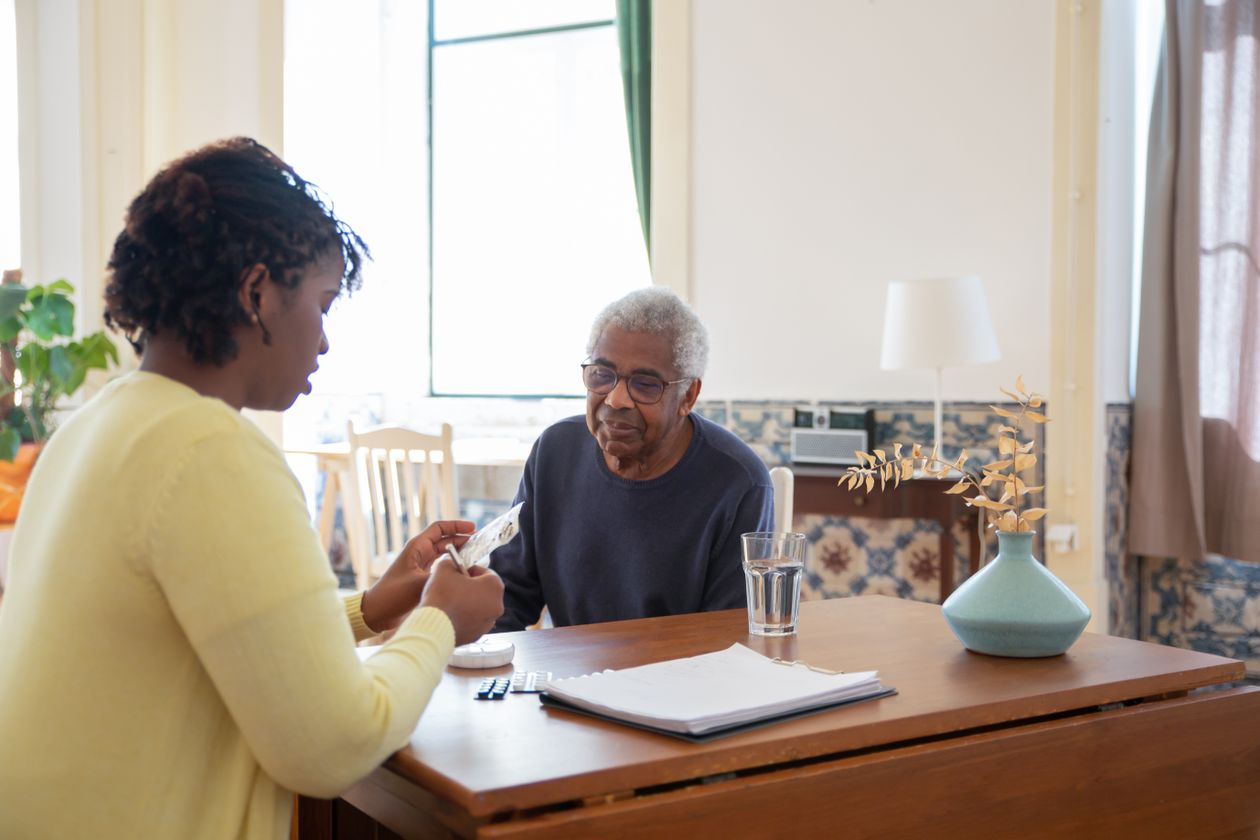
*Photo: Kampus Production / Pexels (free to use).*
What dementia care at home actually looks like
Dementia is not one memory lapse. The World Health Organization describes it as a condition that affects memory, thinking, and the ability to do daily activities, caused by diseases that damage the brain. Alzheimer disease accounts for about 60 to 70% of cases. In 2021, 57 million people were living with dementia worldwide, with nearly 10 million new cases each year (WHO dementia fact sheet).
In the United States, the Alzheimer's Association's 2026 *Facts and Figures* report estimates 7.4 million Americans age 65 and older living with Alzheimer's, about 11% of that age group. Almost two-thirds of Americans with Alzheimer's are women. People age 65 and older survive an average of four to eight years after diagnosis, though some live as long as 20 years (Alzheimer's Association).
Most of the work still sits with families. Eighty-three percent of help provided to older adults in the United States comes from unpaid caregivers. Nearly 13 million Americans provide unpaid dementia care. In 2025 those caregivers provided more than 19 billion hours of care, valued at $446.3 billion. Sixty-six percent of dementia caregivers live with the person. Fifty-nine percent report high to very high emotional stress. About one-quarter are sandwich-generation caregivers, supporting both an aging parent and a child (same 2026 *Facts and Figures* report).
That load is why families look at robots. It is also why a robot that only chats will disappoint. Dementia care is a stack of small tasks: meals, hydration, medications, orientation, toileting, wandering watch, and the emotional work of staying calm when the day repeats itself. For the burnout side of that stack, see our guide on how to spot caregiver burnout and reduce the daily load.
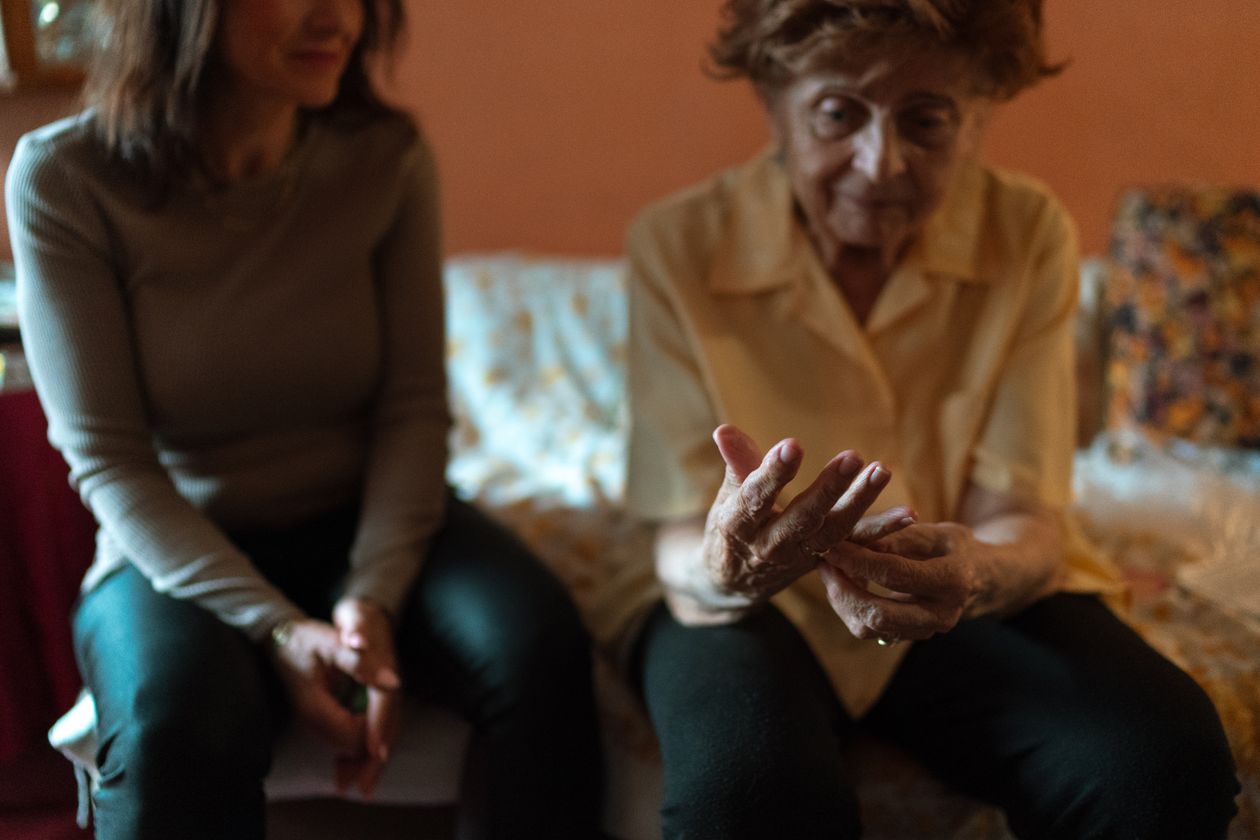
*Photo: Jsme MILA / Pexels (free to use).*
What a home robot can help with (and what it cannot)
A home robot for dementia is not a nurse. It is closer to a mobile prompt that does not get impatient: it can start a routine, repeat a cue, and notice some gaps a speaker on a shelf will miss. For a plain-language map of the category, see what an AI companion robot is.
Where robots can help in mild-to-moderate dementia:
- Orientation cues. Time of day, what happens next, and "it is Tuesday, lunch is in the kitchen."
- Medication and appointment reminders. Spoken prompts, plus a nudge to a caregiver if the person does not respond. Pair this with a human system, not instead of one. See how to remember medications at home.
- Meals, water, and simple hygiene prompts. A University of New Hampshire and National Institute on Aging pilot used a Stretch 4 robot ("Robbie") to remind a man living with dementia to eat, drink, exercise, and complete a wash-up routine. His wife could leave for groceries or a game of mahjong because the protocol was posted and the robot followed it (AP News).
- Structure. Morning greeting, a short activity, an afternoon check-in, an evening wind-down. Predictable beats reduce some agitation that comes from empty, confusing hours.
- Calming presence. Therapeutic seal robots such as PARO are designed for tactile, social interaction rather than chores. They are used in dementia care research more than as full home assistants.
- Bridges to people. Reminders to call family, help starting a video visit, or an alert that a planned check-in was missed.
- Safety signals, with limits. Door-open chimes, missed-response alerts, and (on some platforms) fall detection are useful *additions* to a safety plan. They do not lock a door or catch a person who has already left the house.
What a robot cannot do:
- Diagnose, treat, or slow Alzheimer's as a medical device unless a specific product is cleared for that use. Consumer home robots are not a therapy.
- Bathe, toilet, transfer from bed to chair, or manage incontinence.
- Be the only supervisor for someone with a history of wandering. The National Institute on Aging is direct: do not leave a person with Alzheimer's who has a history of wandering unattended (NIA).
- Interpret pain, infection, or a sudden behavior change the way a nurse or experienced caregiver can.
- Replace late-stage, around-the-clock personal care.
| Need at home | Robot can help? | Still needs a person? |
|---|---|---|
| Spoken reminders for meds, meals, water | Yes, if the person still responds to voice or a simple screen | Yes. Someone must set the plan and handle missed doses |
| Daily structure and light activity | Yes, especially in mild disease | Yes. Preference, culture, and "this is a bad day" still need a human |
| Calming tactile companion (PARO-type) | Sometimes, as a supplement | Yes. Not a stand-in for family or staff |
| Wandering prevention | No. Alerts only | Yes. Locks, ID, neighbors, and a search plan |
| Bathing, dressing, transfers | No | Yes |
| Overnight safety in middle or late stage | No as sole coverage | Yes |
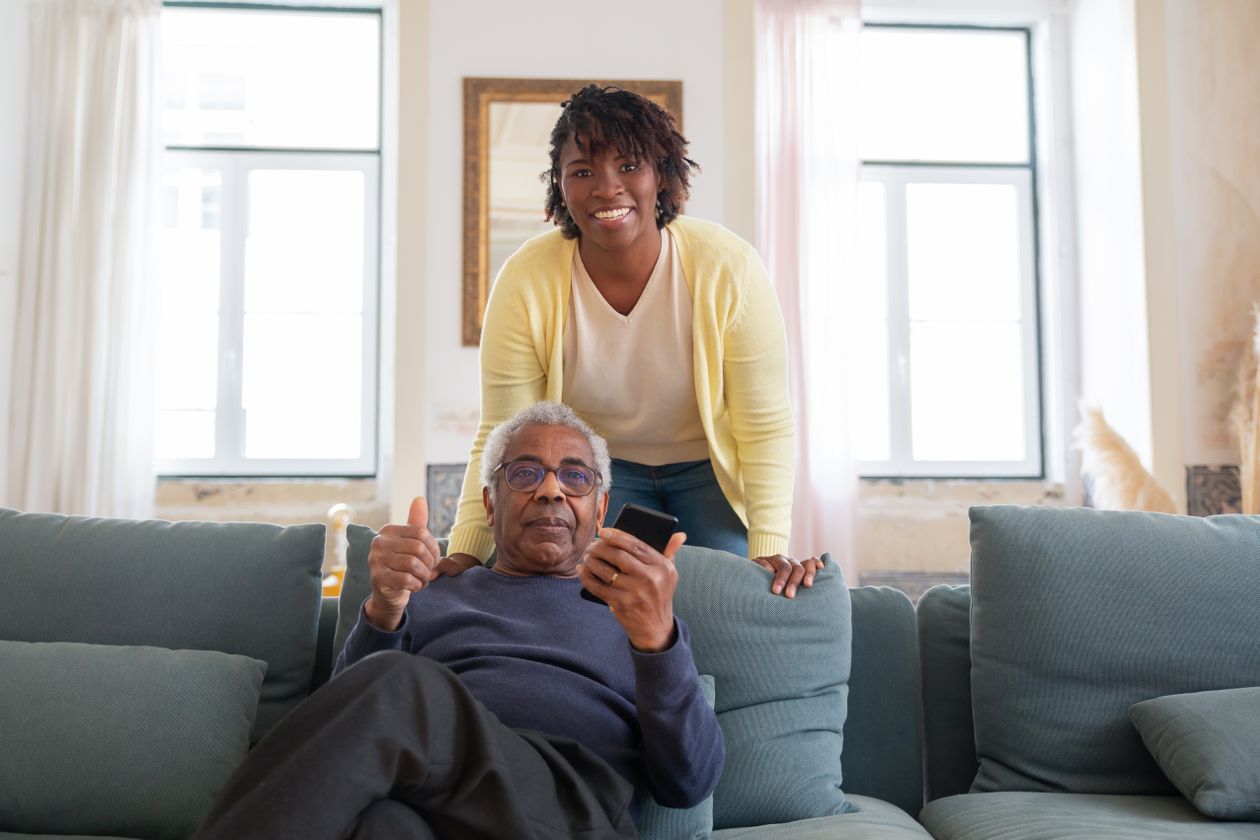
*Photo: Kampus Production / Pexels (free to use).*
Match the robot to the stage of dementia
Alzheimer's typically moves through early (mild), middle (moderate), and late (severe) stages. Stages overlap, and people do not follow a script (Alzheimer's Association stages).
Early / mild. Many people still live independently, drive, and join social activities, even while they lose words, misplace objects, or struggle to plan. This is the strongest window for a home robot: reminders, cognitive games, check-ins, and honest talk that the device is a machine. It is also the right time to put legal and financial plans in place, because the person can still take part.
Middle / moderate. This is usually the longest stage and can last many years. People may forget personal history, get lost in time or place, need help choosing clothes, and show a higher tendency to wander. A robot can still cue meals and meds if the person responds. It should not be left as the only adult in the house once being alone has become unsafe. The Alzheimer's Association notes that in the middle stage it often becomes too difficult or dangerous for a person to be left alone.
Late / severe. People need around-the-clock help with personal care, lose awareness of recent events, and eventually struggle to walk, sit, or swallow. A robot's job here, if any, is limited: familiar music, a soft presence, a way for family to look in. Hands-on care, hospice, and dignity work stay human.
If your parent hides health worries, do not expect a chatty robot to extract a full report. Look for missed-response alerts and simple yes/no check-ins, then follow up in person.
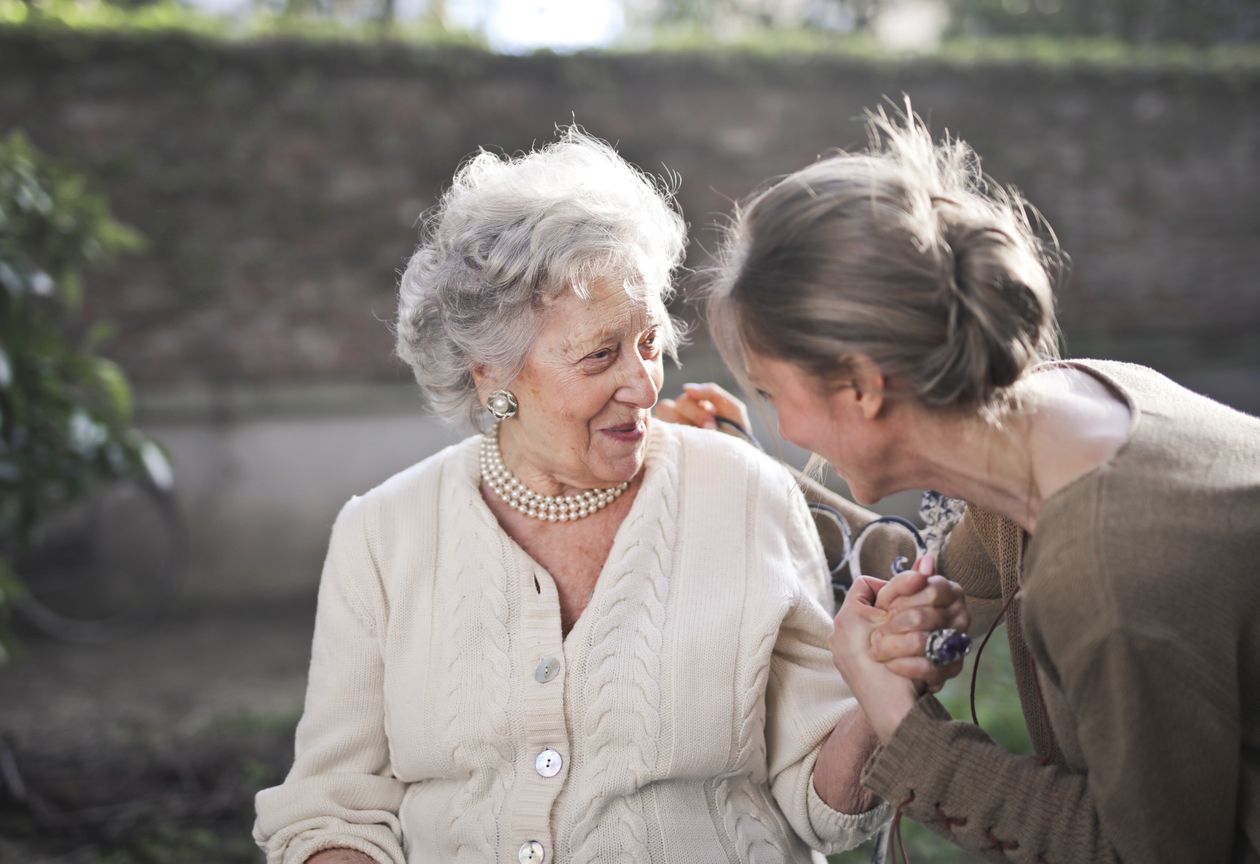
*Photo: Pexels (free to use).*
Cues, reminders, and daily structure
Dementia care goes better when the day is boring in a good way. Same chair for breakfast. Same words for "time for your pills." The robot's advantage is that it does not get impatient when it has to say the same sentence twelve times.
A practical home setup looks like this:
- Write the protocol on paper first. Who eats when, which pills, which water target, which walk, which "if this fails, call whom." The UNH Stretch 4 deployment posted the care protocol on the wall. Do the same, even if the robot is simpler.
- Use one prompt style. Short sentences. One action per cue. "Brian, it is time to drink water" beats a paragraph.
- Build a missed-response path. If there is no answer after two or three prompts, the system should notify a named person, not keep looping forever.
- Keep medications in a system a human can audit. Pillboxes, blister packs, or a locked dispenser still need a person to fill them. A robot reminder does not know whether the tablet actually went in the mouth.
- Protect dignity. Tell the person it is a machine. People with mild dementia can still understand that, and honesty reduces the later shock of "I thought you were a person."
Weekly pill organizers still help. They also spill, get opened on the wrong day, and get forgotten in a different room. That is the gap a spoken, in-room prompt is meant to close, not a reason to throw the box away.

*Photo: Pexels (free to use).*
Safety, wandering, and false security
This is the section that should slow a purchase.
The Alzheimer's Association reports that six in 10 people living with dementia will wander at least once, and many do so repeatedly. It can happen at any stage. When someone is missing, many are found within 1.5 miles of where they disappeared. If they are not found within 15 minutes, call 911 and say the person has dementia (Alzheimer's Association wandering guide).
NIA advice for wandering is physical and social, not robotic: ID or a medical bracelet, labeled clothing, GPS as a backup, tell neighbors and police, keep a recent photo, lock doors with a key nearby for emergencies, hide departure cues such as coats and keys, and use a chime when a door opens. NIA also warns that locked doors and doorknob covers should be used only when a caregiver is present, because they can block an emergency exit. The Alzheimer's Association is explicit: never lock a person in at home.
What that means for a home robot:
- A robot that can notice a door or a missed check-in is useful.
- A robot that cannot follow someone down the street is not a wandering solution.
- A camera-only setup has the same gap, plus a privacy cost. Families comparing options should ask who sees video, how long it is stored, and whether the person living with dementia consented while they still could.
Home safety still starts with the boring list NIA publishes: lighting, rugs, stove shut-offs, grab bars, working smoke and carbon monoxide alarms (NIA home safety tips). A robot does not replace that walkthrough.

*Photo: Unsplash (free license).*
What the research actually shows
Evidence is real, mixed, and narrower than marketing.
Therapeutic robot pets. PARO has the longest research trail in dementia. A 2022 systematic review and meta-analysis of socially assistive robots found PARO feasible and acceptable, with little consistent effect on agitation, cognition, overall neuropsychiatric symptoms, depression, anxiety, or quality of life compared with usual or alternative care over 5 to 12 weeks (Yu, Sommerlad, Sakure, and Livingston, *Ageing Research Reviews*, doi:10.1016/j.arr.2022.101633). A 2023 meta-analysis of randomized trials in long-term care found socially assistive robots could reduce depression and anxiety and increase positive emotion and social interaction, with no significant improvement in agitation, overall behavioral symptoms, or quality of life (Gerontology). A 2024 randomized trial of group PARO sessions for older adults with mild dementia reported gains on cognitive testing, loneliness, and some physiological measures by the end of the program, with physiological effects fading after the sessions stopped (JAMDA). Treat PARO as a possible mood and engagement aid, not a treatment.
Home cognitive robots. A 12-week, rater-blind randomized trial in *Psychiatry Investigation* assigned 51 people with mild Alzheimer's dementia to a home robot (Bomy) that delivered cognitive training at least 60 minutes a day, five days a week, or to a waitlist. Completers in the robot group showed improvements in working memory, visual association memory, and reaction time, plus EEG changes in frontal theta and central beta activity. The study was small, participants knew their group, dropout was higher in the robot arm, and there was no active control such as paper-and-pencil training (Kim et al., 2026, Psychiatry Investigation). Promising for mild disease. Not a reason to skip a clinician.
Mobile home robots. The Stretch 4 story is a case, not a trial: one household, NIA-funded lab support, a robot that costs nearly $30,000, and a spouse who still designed the protocol. It shows what "help" can look like when a person still answers yes/no and a caregiver is in the loop. It does not show that a $30,000 machine replaces home-care hours.
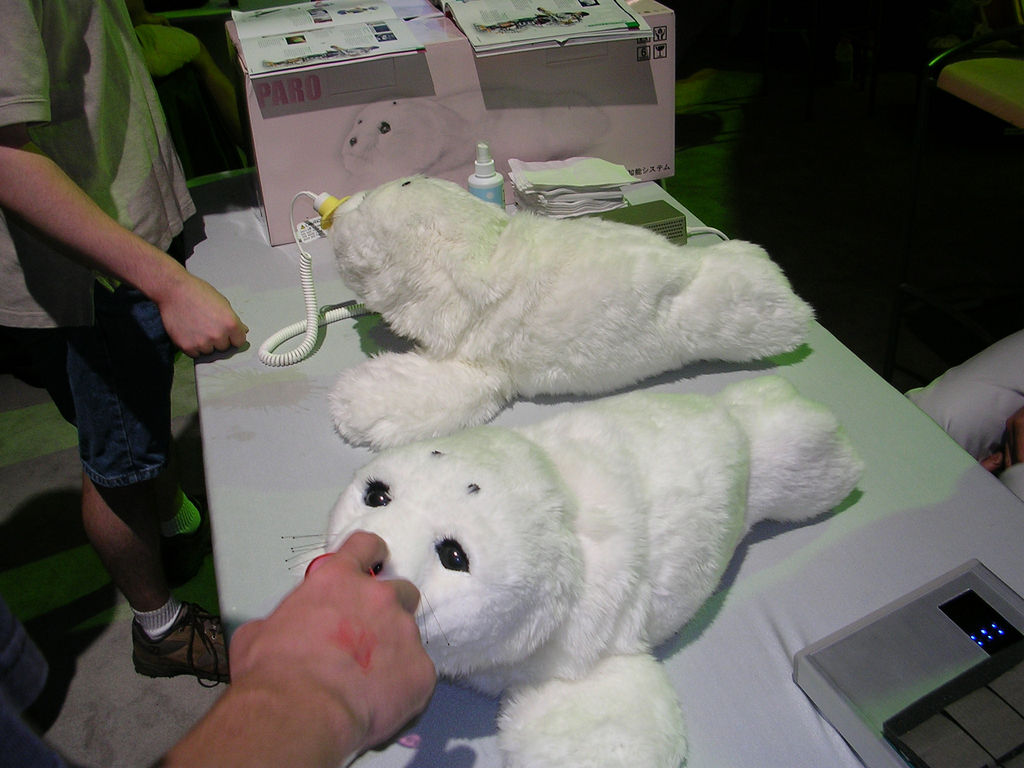
*Photo: Aaron Biggs / Wikimedia Commons (CC BY-SA 2.0).*
How families can try a robot without replacing people
Use a trial, not a leap.
1. Name the job in one sentence
Examples: "Remind Dad to take the noon pills and drink water." "Keep Mom company between 1 p.m. and 4 p.m. so she does not pace the door." If you cannot name the job, you are buying a gadget.
2. Confirm the person still responds to voice or touch
If they no longer follow a one-step spoken request, a conversational robot will fail. A soft pet robot or purely environmental sensors may still have a role.
3. Put the human coverage on a calendar first
Who is in the house, who is on call, who does evenings. Price those hours honestly. In-home care costs are the comparison, not the robot's sticker alone.
4. Ask the privacy questions out loud
What is recorded. Where audio and video go. Who in the family can see a dashboard. How to delete data. Whether the company sells insights. Write the answers down before you unbox anything.
5. Introduce it as a machine
Try: "This is a robot that can remind you about lunch and call me if you do not answer. It is not a person. If you dislike it, we stop."
6. Watch the first two weeks like a study
Did reminders actually change behavior? Did agitation go up or down? Did the person try to "go home" more because a voice in the house felt like a visitor? Stop if the device confuses more than it helps.
Loneliness can still matter in this picture. A robot that holds the empty afternoon is closer to the companion-robot case for lonely seniors than to a nursing shift. Keep those use cases distinct.
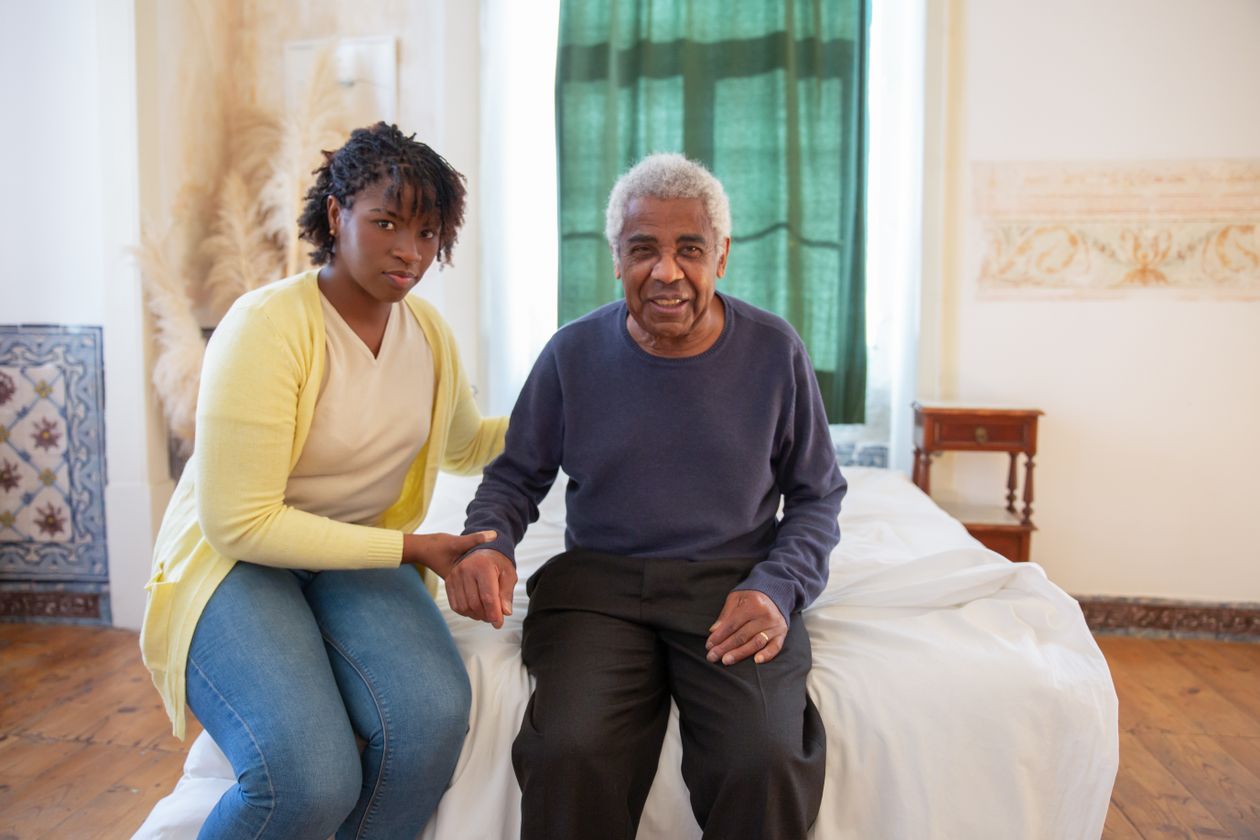
*Photo: Kampus Production / Pexels (free to use).*
When human care is still required
Draw a hard line.
Call for more human help, not a better robot, when:
- The person has wandered, gotten lost, or talks about going to work or "going home" while already at home.
- They can no longer follow a one-step instruction.
- Weight is dropping, meals are skipped, or the stove is left on.
- Personal care (bathing, toileting, dressing) needs hands.
- Behavior includes aggression, severe sundowning, or suspicion that a machine will make worse.
- The caregiver cannot sleep because they are the only alarm system.
Paid help, adult day programs, respite, and eventually residential care are not failures. They are how families last. In 2026, U.S. health and long-term care costs for people living with dementia are projected at $409 billion, not counting unpaid care. Seventy percent of lifetime dementia-care costs are borne by families through unpaid work and out-of-pocket costs (2026 Alzheimer's Disease Facts and Figures).
Keep the Association's 24/7 Helpline in the same note as any robot: 800-272-3900.
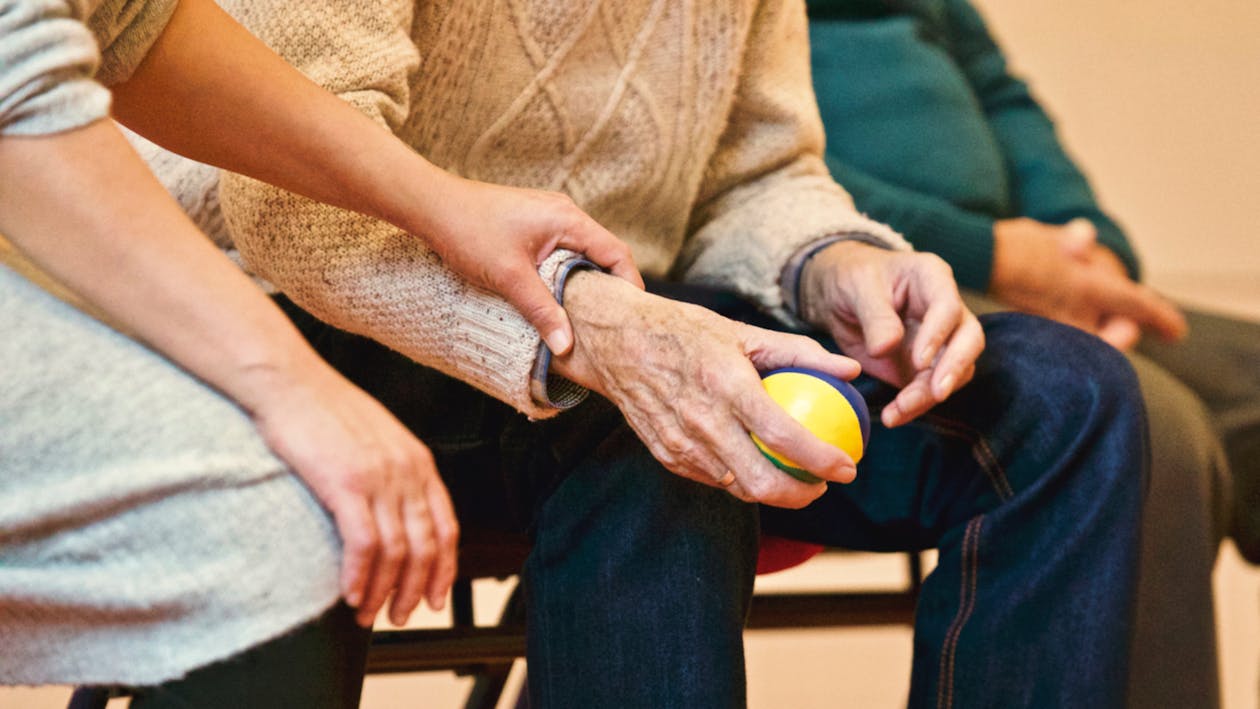
*Photo: Matthias Zomer / Pexels (free to use).*
Frequently asked questions
Can a home robot replace a dementia caregiver?
No. A robot can repeat cues and hold some of the quiet hours. It cannot bathe someone, interpret a urinary tract infection, or stay legally and morally responsible when the person tries to leave.
What stage of dementia is a home robot most useful for?
Mild, and some of moderate, if the person still responds to voice or a simple prompt. Late-stage care is hands-on. Middle-stage wandering risk is the usual reason a robot should not be left in charge.
Do robot pets help with agitation?
Sometimes they help with mood, engagement, and loneliness in structured sessions. High-quality reviews do not show a reliable, lasting effect on agitation or overall behavioral symptoms. Use them as a possible comfort object, not as behavior management.
Is it safe to leave my parent with a robot while I go to the store?
Only if a clinician and your own recent observation say the person can already be left for that long *without* a robot. The UNH couple could do this because the person still answered yes/no and a detailed protocol existed. If there is any wandering history, NIA says do not leave them unattended.
How should we talk about cameras and data?
Assume the person living with dementia may not remember agreeing. Decide while they can still take part. Prefer products that default to less recording, not more.
Conclusion
A home robot can help with dementia care at home when the job is cues, reminders, structure, and company in the mild-to-moderate window. It cannot be the plan for wandering, personal care, or the years when someone needs another human in the room.
If you are building a care mix, put the robot on the same list as pillboxes, door chimes, adult day, and paid hours. Keep people at the center. Use the machine for the sentences that wear caregivers out from repetition, then spend the saved attention on the parts only a person can do.
Next step: If you are comparing home robots for aging parents, start at rhem.ai and keep this page's can/cannot list next to any sales demo.